BrainStrong

Measurable recovery after brain injury continues for months and years.1 See the gains the day-to-day can't show.

A daily log for family caregivers of TBI survivors — so you can see recovery across cognition, behaviour and mood, even when this week feels like a setback.

1 Dikmen, S. S., Corrigan, J. D., Levin, H. S., Machamer, J., Stiers, W., & Weisskopf, M. G. (2009). Cognitive outcome following traumatic brain injury. Review of longitudinal studies shows that most cognitive recovery after moderate-to-severe TBI occurs in the first 6–12 months, but measurable gains continue for years.

Brain injury recovery happens in fractions. A better word one day. A softer tone the next. Then a bad evening that wipes the memory of every small gain. You want to believe the rehab plan is working, but your brain is only tracking the most recent bad hour.

Over months, this quietly turns into something worse: you lose faith in strategies that are actually helping, you stop asking for the supports the survivor still needs, and the quiet work you're doing every day starts to feel invisible even to you.

“I can't tell if anything is really changing.”

Cognitive and behavioural recovery after TBI moves in centimetres. A slightly longer attention span. Less agitation at 4 p.m. A memory that didn't slip today. Day to day, none of it registers. Over months, the arc is real.

The Timeline turns your daily check-ins into a trend line across weeks and months. You'll see whether cognition, behaviour, mood and your own caregiver load are rising, flat, or falling — a picture your memory on a hard Tuesday cannot hold.
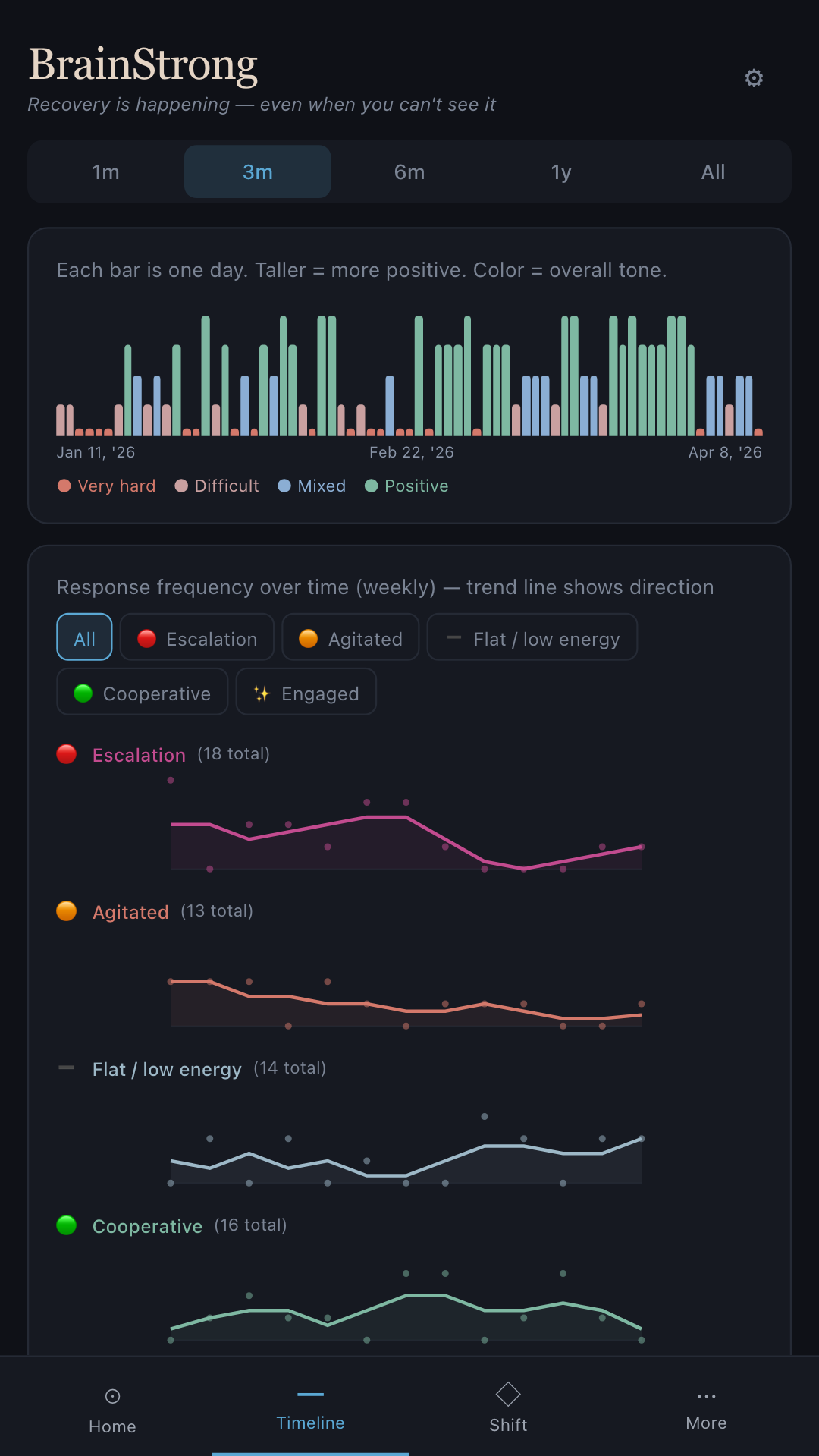
BrainStrong Timeline screen showing recovery trends across cognitive and behavioural domains

“I don't know which of the things we're doing is the one that matters.”

You're running a dozen interventions: routines, cueing, rest breaks, therapy homework, sleep protection, medication timing. When the survivor has a calmer week, you have no way to tell which of them earned it.

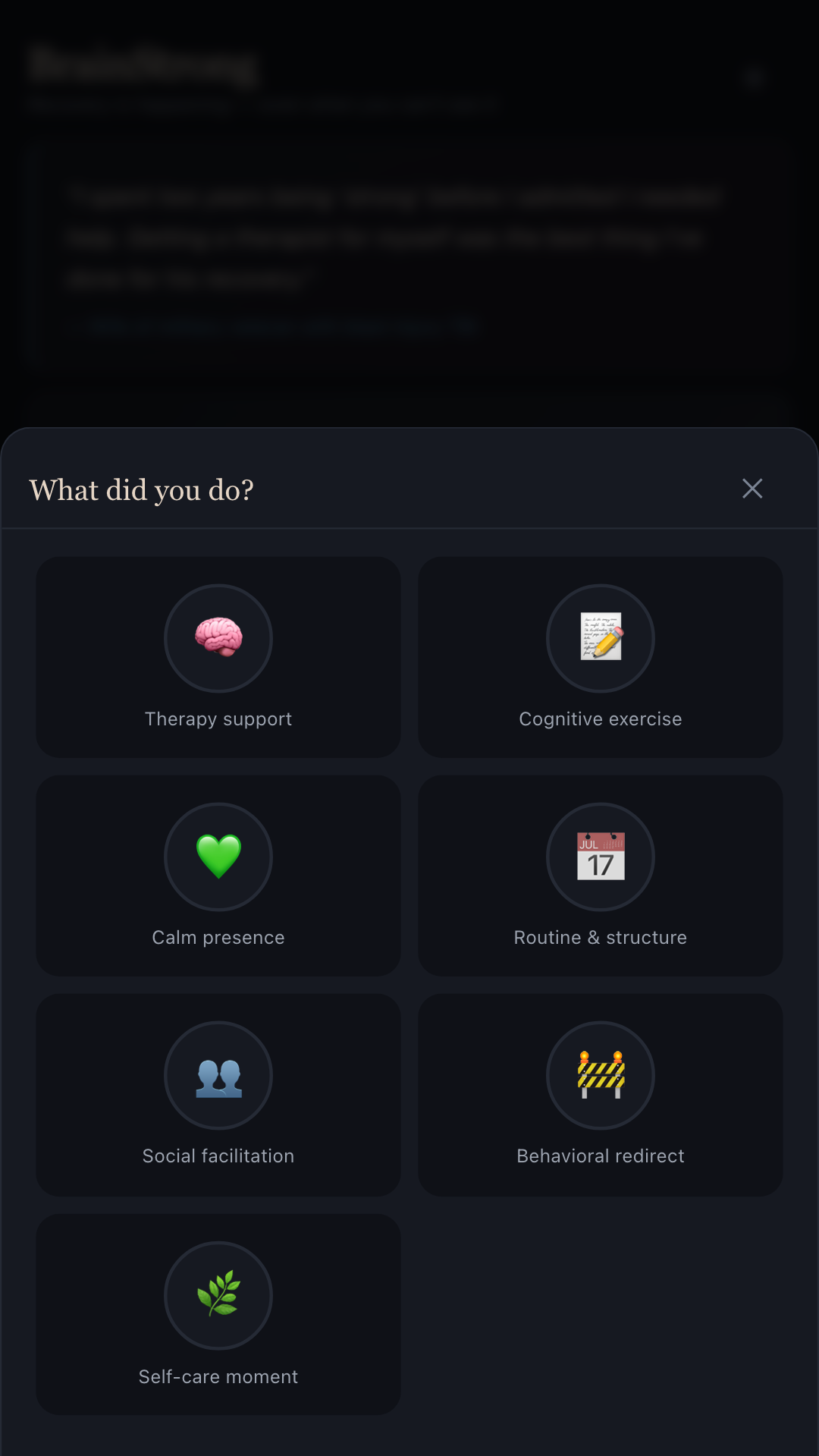
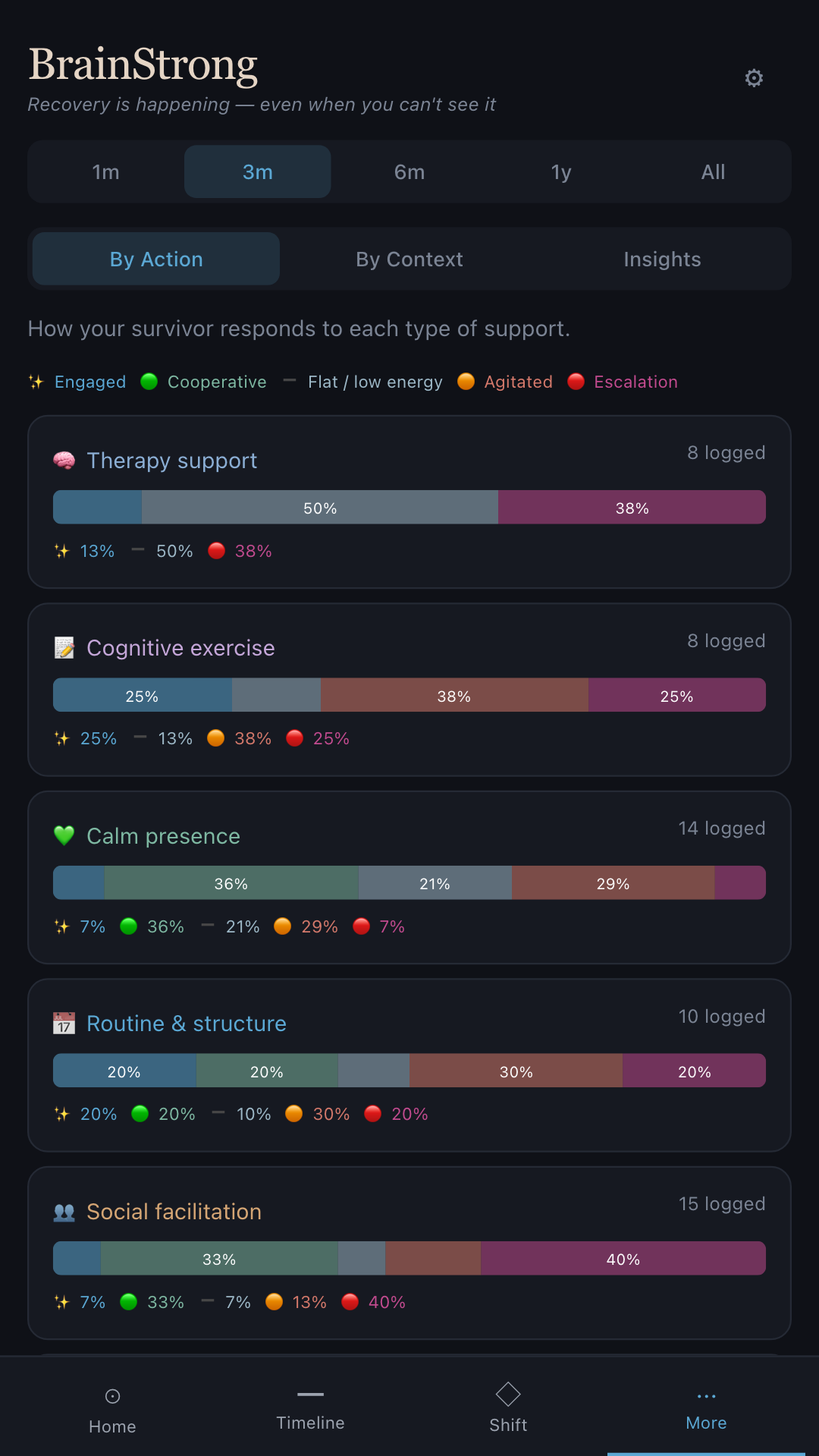
The Pattern Engine cross-references your daily entries to surface which inputs correlate with calmer days. Example insights might look like "agitation is lower on days with a protected afternoon rest" or "cognitive clarity is higher the day after 7+ hours of sleep" — with your own data, from your own logs.

BrainStrong Patterns screen showing correlations between caregiver actions and recovery signs

“Sometimes I can't find the person I knew in there.”

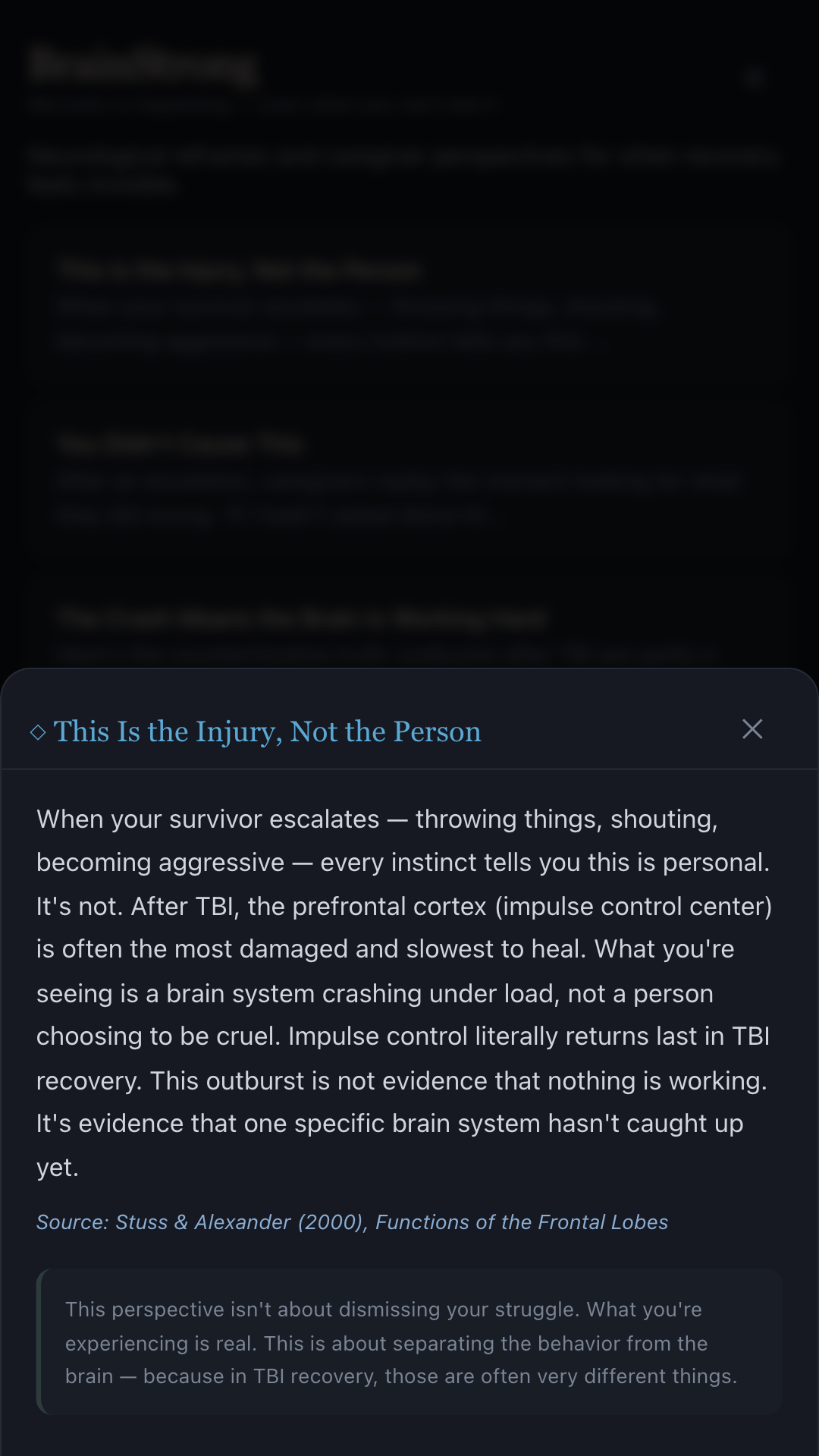
Irritability, disinhibition, apathy, short temper — these are common after brain injury, and they are symptoms of the injury, not of the person. Remembering that in the middle of a hard moment is almost impossible without help.

Perspective Shift cards deliver short, research-backed reframes at the moments you need them most. Each card pairs what you're feeling with what the TBI literature says about recovery, behavioural symptoms, and what caregivers commonly mistake for regression.

BrainStrong Perspective Shift screen showing a research-backed reframe for a TBI caregiver

“I'm barely keeping all the appointments straight.”

Caregiving a TBI survivor is a full-time job layered on top of every other job. There is no room for another binder. The daily check-in takes 30 seconds: a few sliders, an optional note, done.

The Daily Log is built for exhausted caregivers. No open-ended prompts. Rate a few dimensions and move on. Those 30 seconds become the data that powers the Timeline, the Patterns, and the summary you can hand the neurologist at the next appointment.

BrainStrong daily log screen with sliders for cognition, behaviour and caregiver load

30 seconds a day

Fast enough to log every night, even after a long one. That's how the trend gets built.

Research-backed

Grounded in the TBI rehabilitation literature — not wellness clichés.

Private by design

All data stays on your device. No accounts, no servers, no analytics.

Built for you. Not the survivor. Not the neurologist. You.

BrainStrong is for the family caregiver doing the daily work of rehab at home — the person the care team rarely asks how they're doing.

{{^app.live}}

Coming soon to Google Play

{{/app.live}}