DownStrong
A daily log for parents of a child with Down syndrome — so the months of therapy practice, tiny gains and real growth become something you can actually see over time.
1 Fidler, D. J. (2005). The emerging Down syndrome behavioral phenotype in early childhood: Implications for practice. Children with Down syndrome reach developmental milestones on a delayed but steadily progressing trajectory, and continue gaining skills across childhood and into adulthood.
The problem
The milestone charts on the paediatrician's wall weren't made for your child. Every visit, your brain does a quiet comparison you didn't ask it to do: where are we versus where are they. And every comparison steals a little bit of the joy out of a week that was actually full of small wins.
Over time, this erodes the thing you most need to keep doing: trusting your child's own timeline. If you can't see the arc of your child's own progress, it's easy to either give up on approaches that are working or grind yourself into exhaustion chasing someone else's timetable.
A new sign, a cleaner spoon grip, an extra word at the end of a sentence — those are the real milestones of Down syndrome development. Over a week you can't feel them. Over six months the arc is real.
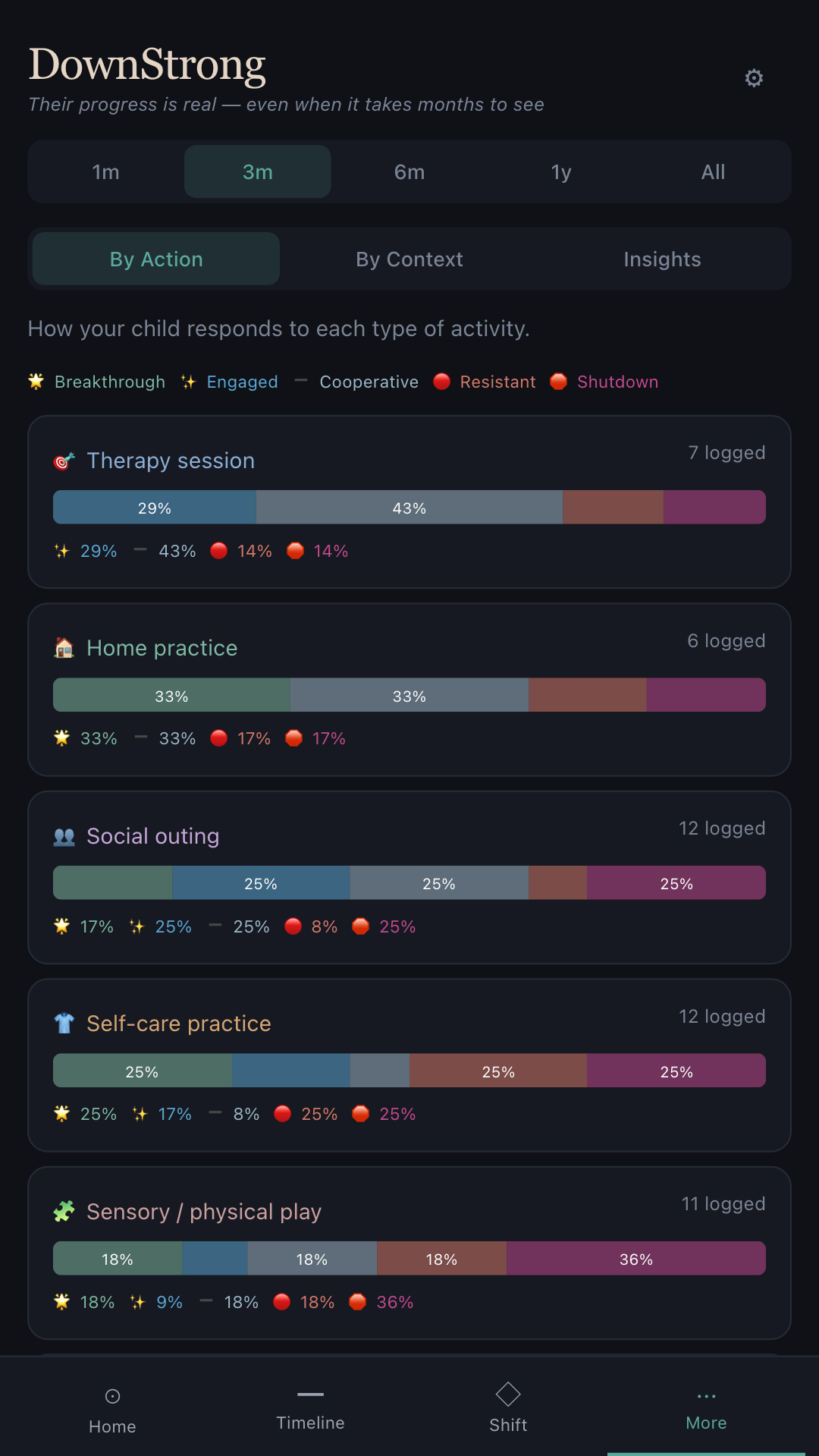
The Timeline turns your daily check-ins into a trend line across weeks and months. You'll see whether communication, motor skills, behaviour and routine practice are moving in the direction you were hoping for — on your child's own timeline, not the standard chart.
You're layering speech homework, OT suggestions, feeding work, behaviour strategies, maybe a reading programme. When something clicks, you don't know which piece earned it.
The Pattern Engine cross-references your daily entries to surface which inputs correlate with calmer days and better practice. Example insights might look like "sign language use is higher on days after therapy" or "behaviour is smoother when morning routines are kept simple" — drawn from your own logs.
Comparisons to neurotypical peers sneak in uninvited — at parties, at school drop-off, in the playground. They shrink a child who is growing beautifully on her own schedule into a data point that doesn't fit.
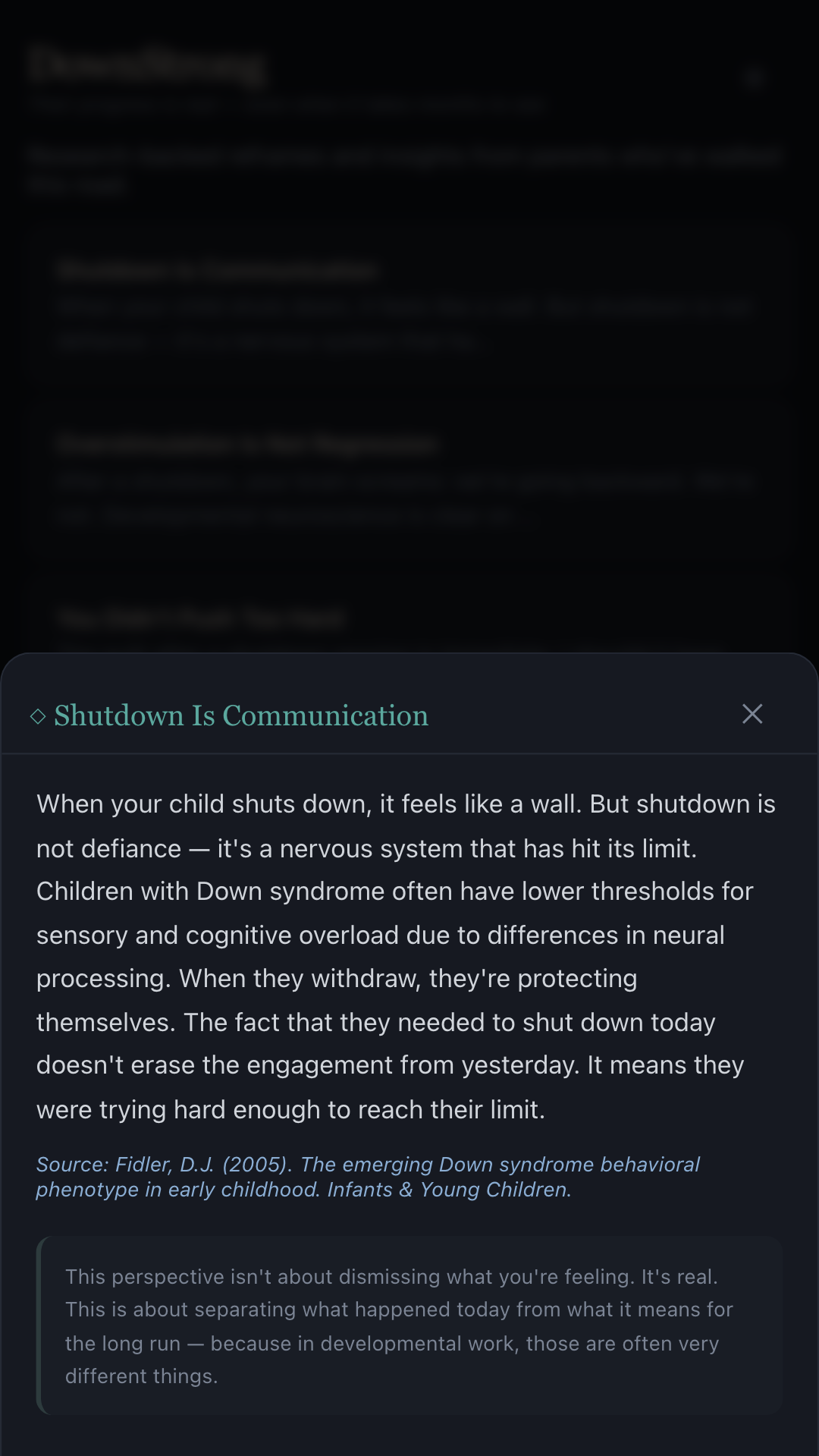
Perspective Shift cards deliver short reframes grounded in the Down syndrome development literature. Each card pairs what you're feeling with what researchers and experienced parents say about pace, strengths, plateaus, and what matters at each age — so the chart on the wall stops being the thing you measure love against.
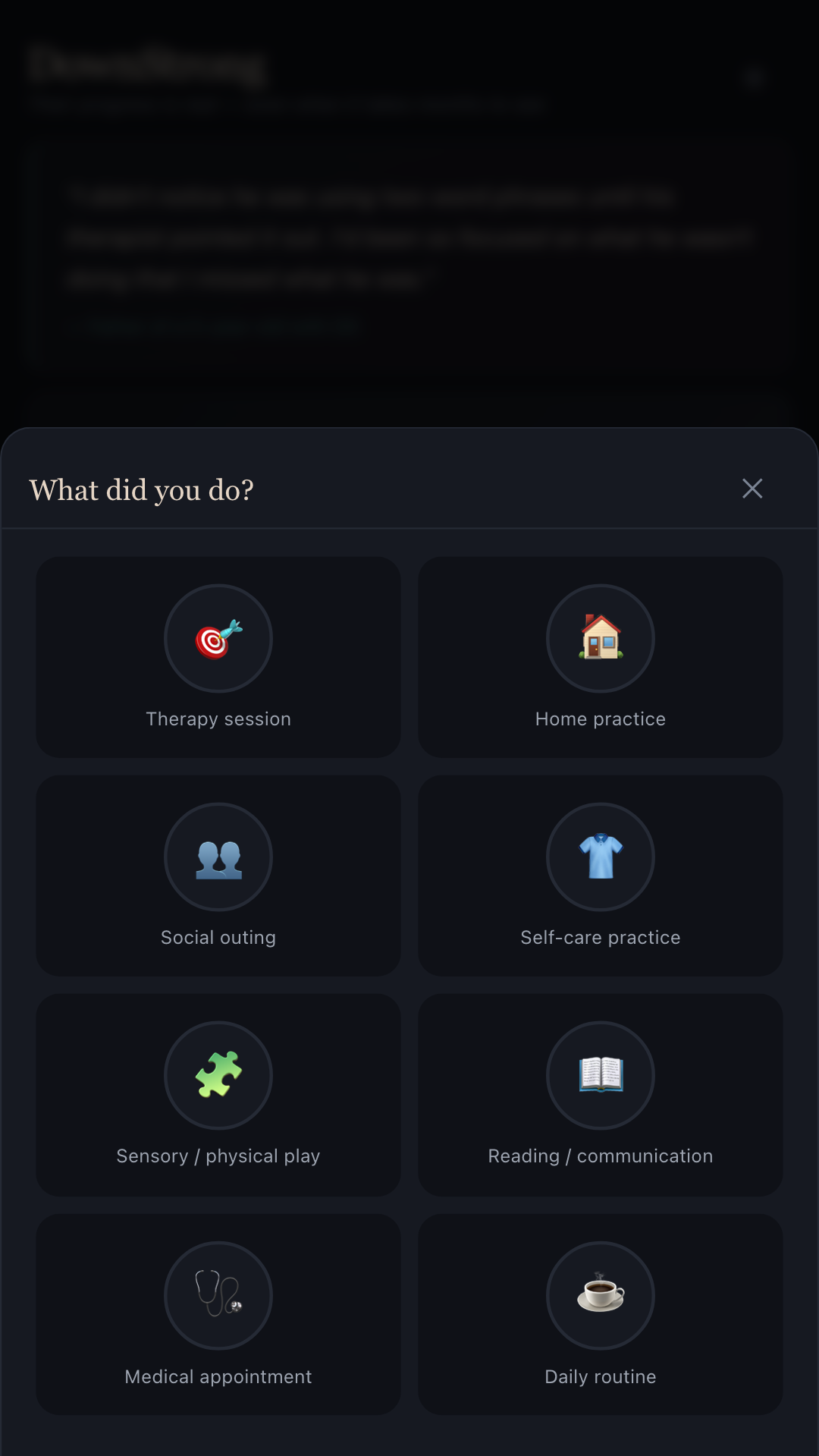
Between therapies, school, medical visits and just being a parent, there is no time to write a paragraph at the end of the day. The daily check-in takes 30 seconds. A few sliders, one optional note, done.
The Daily Log is designed for parents who have already given the day everything. Rate a few dimensions and move on. Those 30 seconds power the Timeline, the Patterns, and the picture you can bring to the next IEP meeting or therapy review.
Fast enough to do on the busiest days. That's how trends get built.
No comparisons to neurotypical charts. The trend line is only ever about your child.
All data stays on your device. No accounts, no servers, no analytics.
DownStrong is for the parent doing the daily, unglamorous work of practice, therapy and advocacy for a child with Down syndrome.
{{^app.live}}Coming soon to Google Play
{{/app.live}}