LearnStrong
A daily log for parents of a child with a learning disability — so you can see the slow, real growth happening underneath the reading scores and the homework battles.
1 Horowitz, S. H., Rawe, J., & Whittaker, M. C. (2017). The State of Learning Disabilities: Understanding the 1 in 5. Roughly 1 in 5 children in the United States has a learning or attention issue, and most make steady academic and social progress with appropriate support — though standardized measures often lag behind real gains.
The problem
You are the reading tutor, the homework coach, the calming voice after a bad day at school, and the advocate on every phone call and email to the district. The report card arrives once a term and says almost nothing about the work you have been doing every night. When progress finally happens, nobody on the outside sees it.
So you start to doubt. You wonder if the programme is worth the money, the tutor is worth the hour, the IEP meeting is worth the fight. If you can't see the arc, it is very easy to walk away from something that was quietly working.
Gains in a child with a learning disability show up as a word sounded out without the usual panic, a homework hour that only had one meltdown, a morning where your child didn't call themselves stupid. None of that fits on a report card.
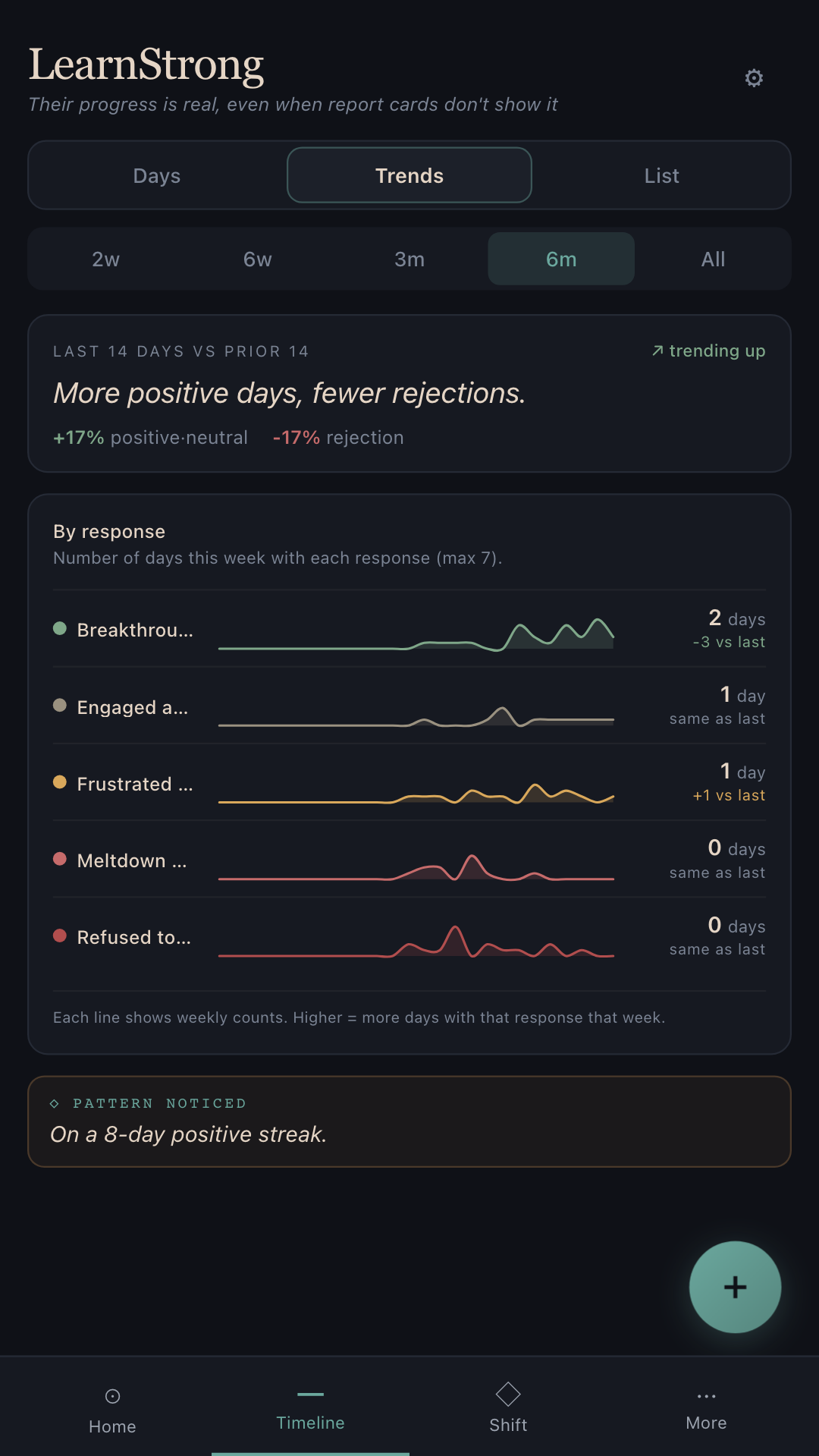
The Timeline turns your daily check-ins into a trend line across weeks and months. You'll see whether reading practice, homework ease, confidence and emotional regulation are moving in the right direction — a picture the school's data points cannot give you.
Between the tutor, the OT, the school programme, the home practice and the accommodations you fought for, there are too many variables to hold in your head. When a good week happens, you have no way to say which one earned it.
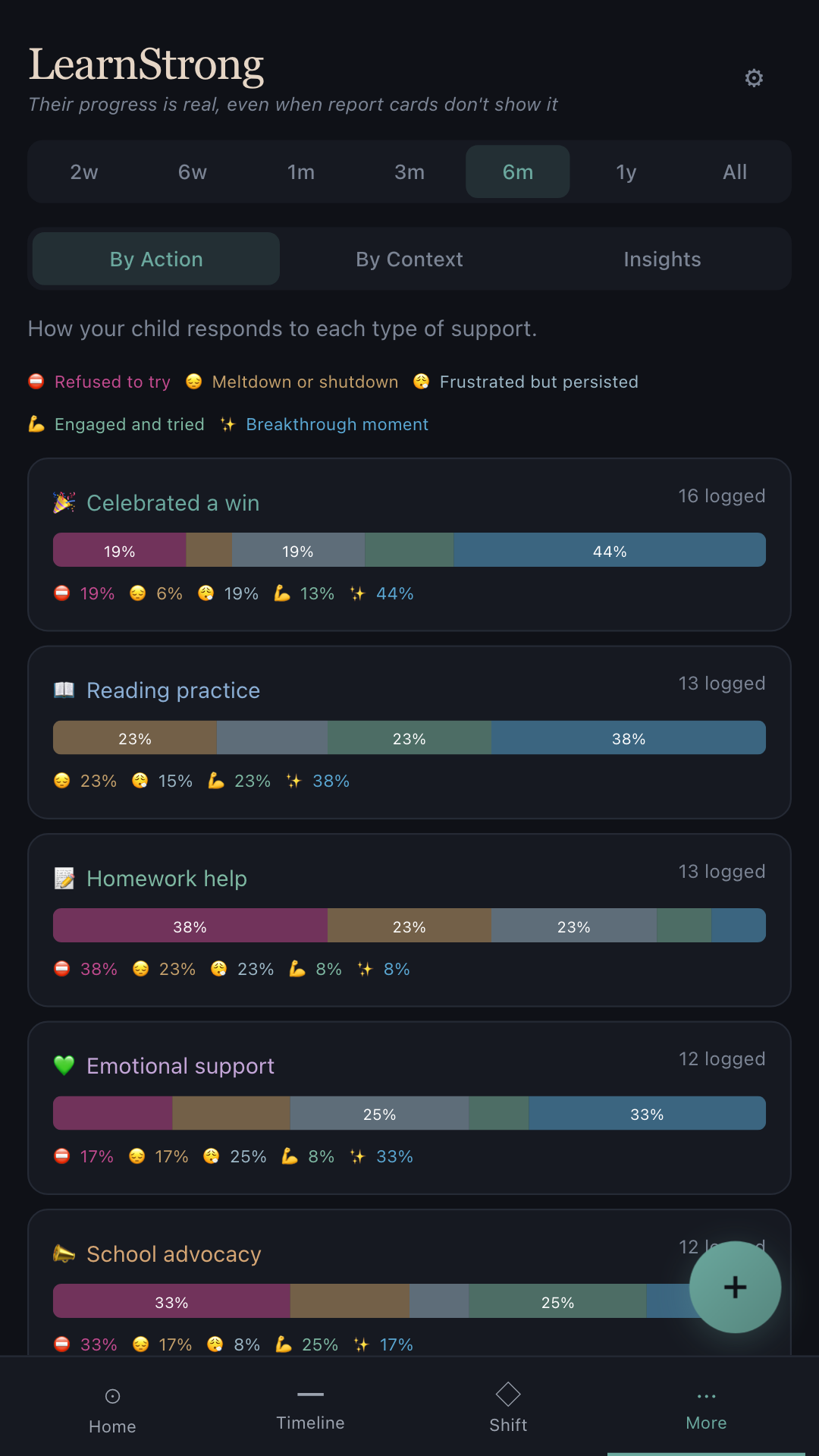
The Pattern Engine cross-references your daily entries to reveal which inputs correlate with calmer homework and stronger practice. Example insights might look like "reading goes better on days with a protected snack" or "writing resistance spikes the day after a hard day at school" — drawn from your own logs.
The biggest cost of an undiagnosed or under-supported learning disability is rarely academic — it's the story a child starts to tell about themselves. Holding the counter-story in a hard moment is almost impossible without help.
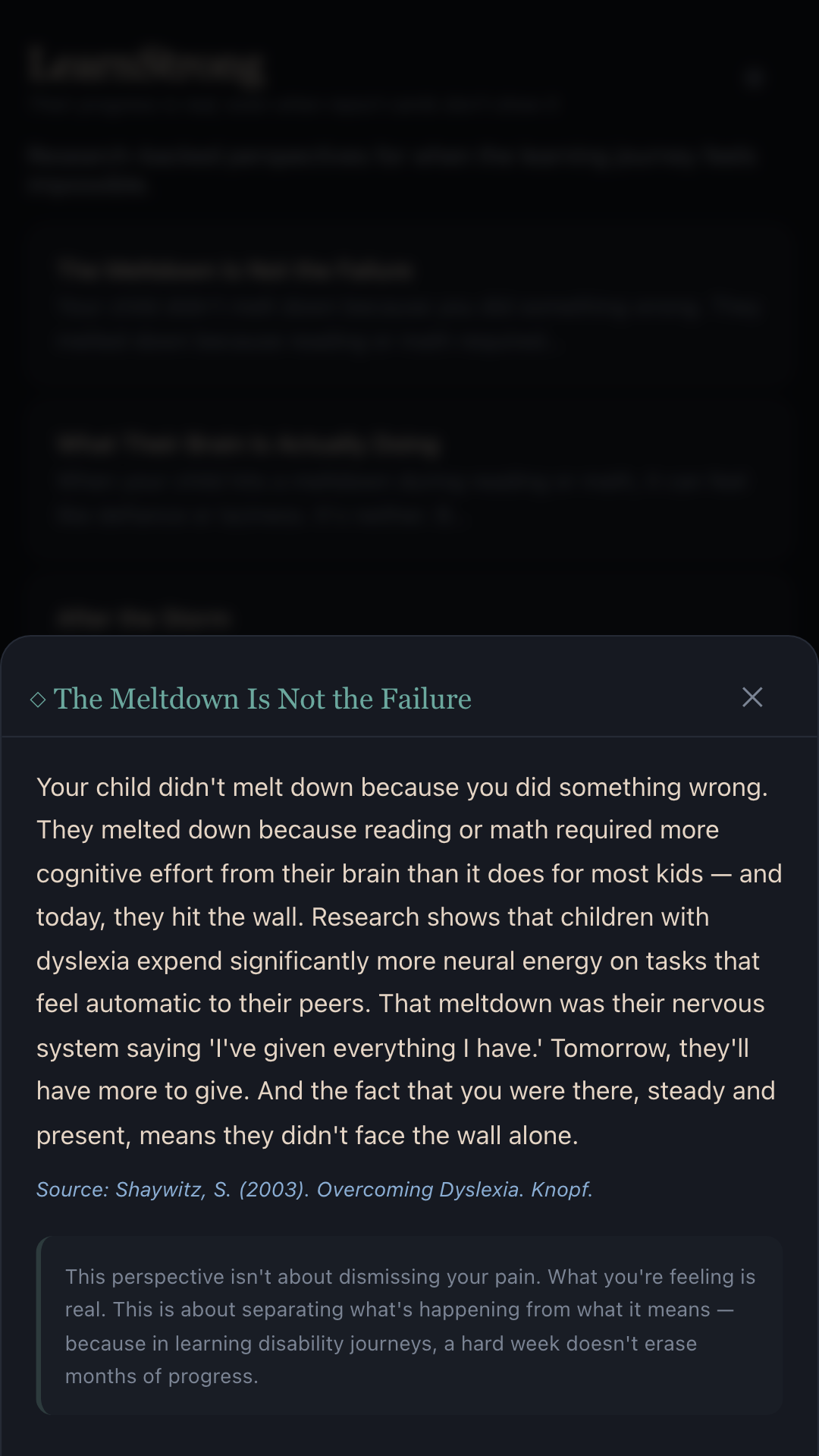
Perspective Shift cards deliver short, research-backed reframes grounded in the learning disability literature — on how the brain learns to read, why effort and ability are not the same thing, and what children with learning differences actually need to hear in a bad moment.
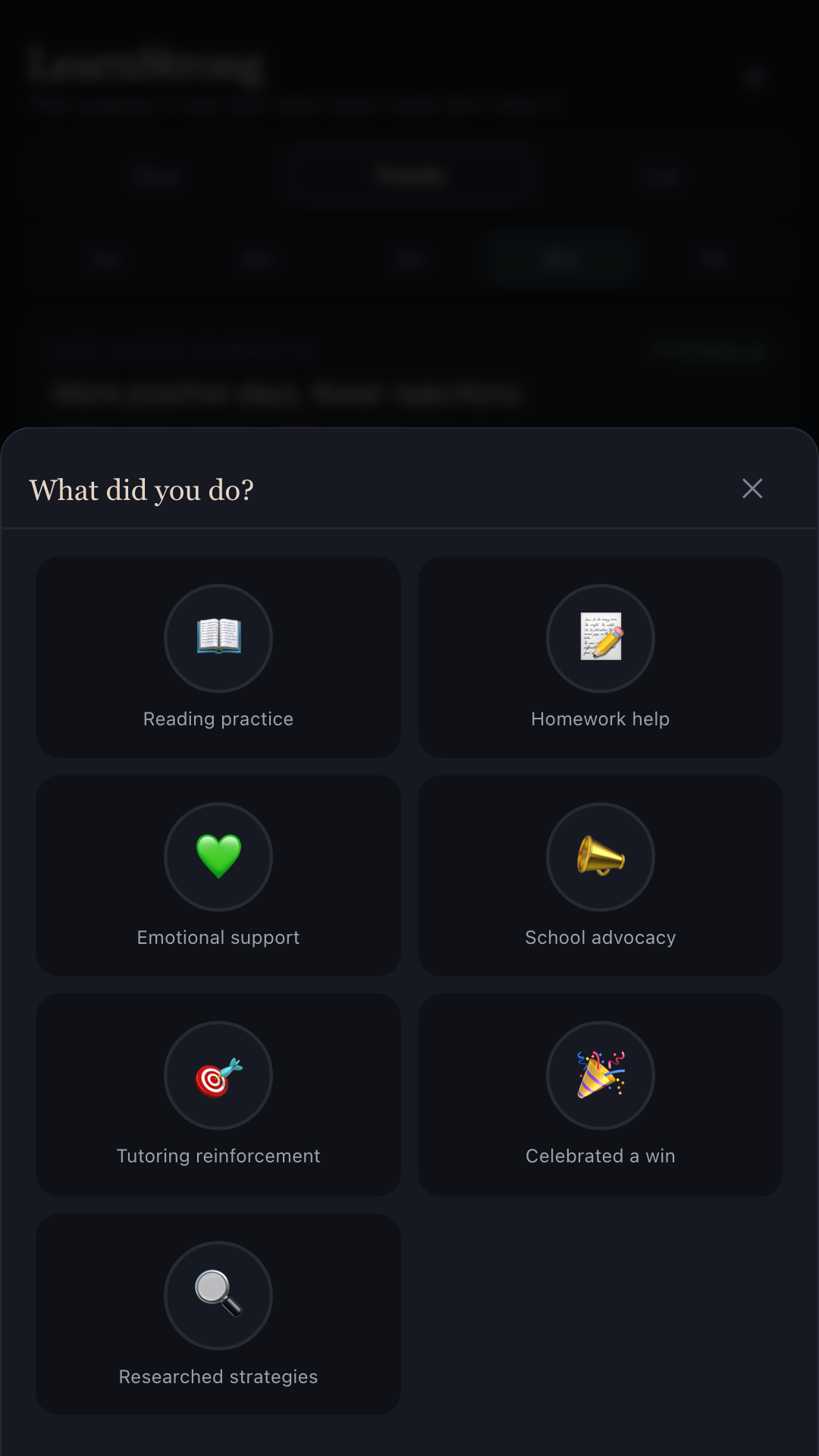
There is no time or energy for yet another form at the end of the day. The daily check-in takes 30 seconds. A few sliders, one optional note, done.
The Daily Log is designed for parents who are already doing too much. Rate a few dimensions and move on. Those 30 seconds power the Timeline, the Patterns, and the clear picture you can bring to the next IEP or 504 meeting.
Fast enough to do after homework and bedtime. That's how trends get built.
Grounded in the learning disability and structured literacy literature — not vague encouragement.
All data stays on your device. No accounts, no servers, no analytics.
LearnStrong is for the parent doing the nightly work of practice, advocacy and self-esteem repair for a child whose school system isn't always on their side.
{{^app.live}}Coming soon to Google Play
{{/app.live}}