TicStrong
A daily log for parents of a child with Tourette's or a chronic tic disorder — so the natural waxing and waning of tics stops hiding whether treatment is actually working.
1 Piacentini, J., Woods, D. W., Scahill, L., Wilhelm, S., Peterson, A. L., Chang, S., et al. (2010). Behavior therapy for children with Tourette disorder: A randomized controlled trial. The Comprehensive Behavioral Intervention for Tics (CBIT) trial showed that behavior therapy significantly reduced tic severity compared with supportive therapy, with over half of children showing meaningful improvement.
The problem
Tics wax. Tics wane. Stress pushes them up, sleep pulls them down, a new season brings a new favourite movement. You know in theory that this is normal. In practice, a bad week at school can convince you that the CBIT work is failing and the whole treatment needs to change.
When you can't see the underlying trend, it is very easy to abandon strategies that are working, to panic at a waxing phase, or to start reacting to tics in ways the research suggests make them more entrenched. The daily work you're trying to do for your child gets lost in the fluctuation.
Tic disorders fluctuate by nature. A bad fortnight doesn't mean regression. A good week doesn't mean cure. Over months, the underlying direction — and whether treatment is changing it — is what actually matters.
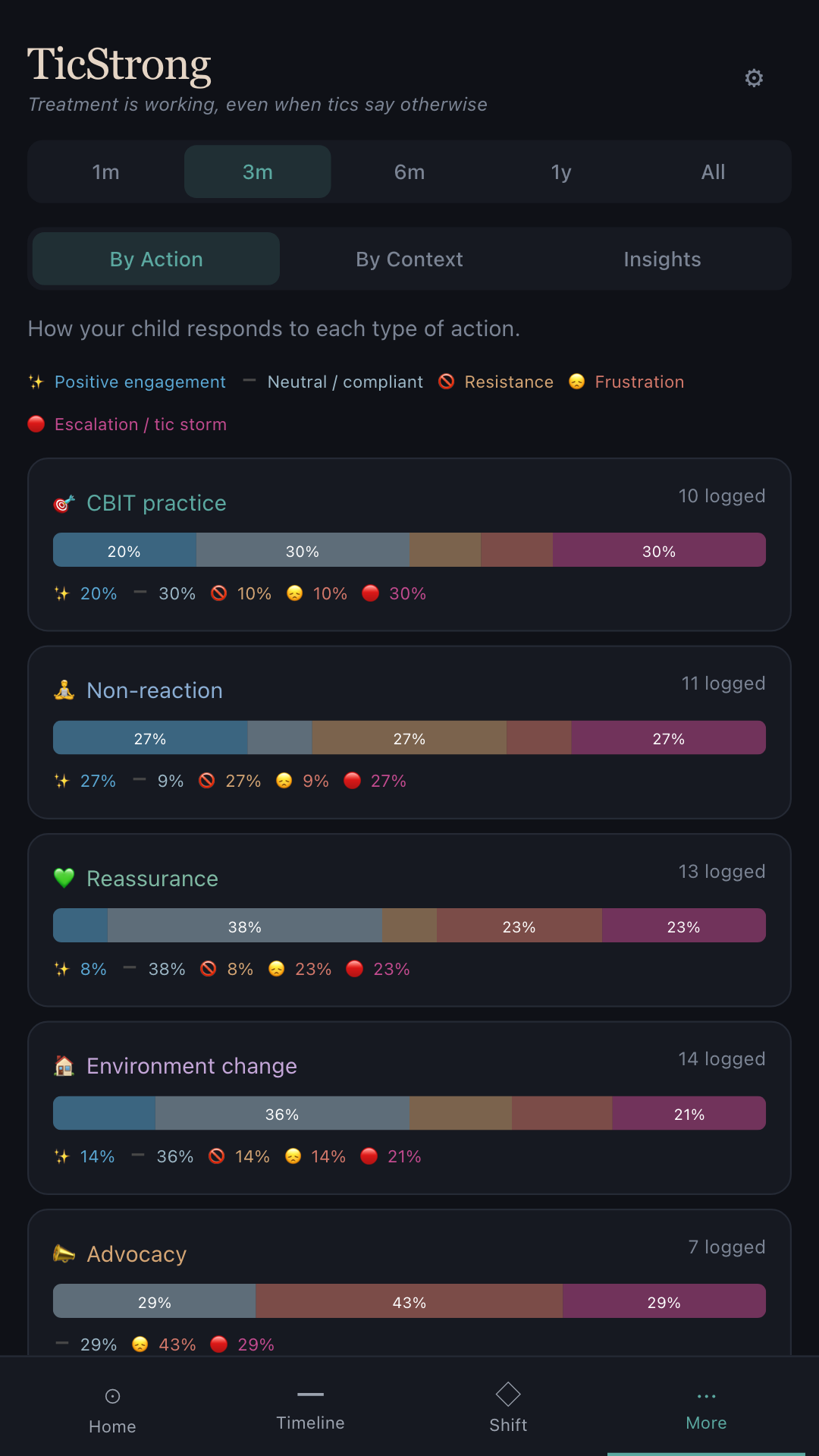
The Timeline turns your daily check-ins into a trend line across weeks and months. You'll see tic severity, CBIT practice, triggers and your own reactions laid out as a picture — so you can tell a waxing phase from an actual regression and make decisions from data instead of panic.
Between habit reversal, competing responses, function-based interventions, triggers, sleep, stress and school — there are too many variables to hold in your head. When a calmer week arrives, you don't know which piece earned it.
The Pattern Engine cross-references your daily entries to reveal which inputs correlate with lower-severity days. Example insights might look like "severity is lower on days after protected downtime" or "tics are more noticeable on days with poor sleep" — drawn from your own logs.
Every parent instinct says: help my child not do the thing. The research is clear that drawing attention to tics, asking for suppression, or reacting visibly usually makes things harder. Knowing that in the middle of a loud moment is almost impossible without help.
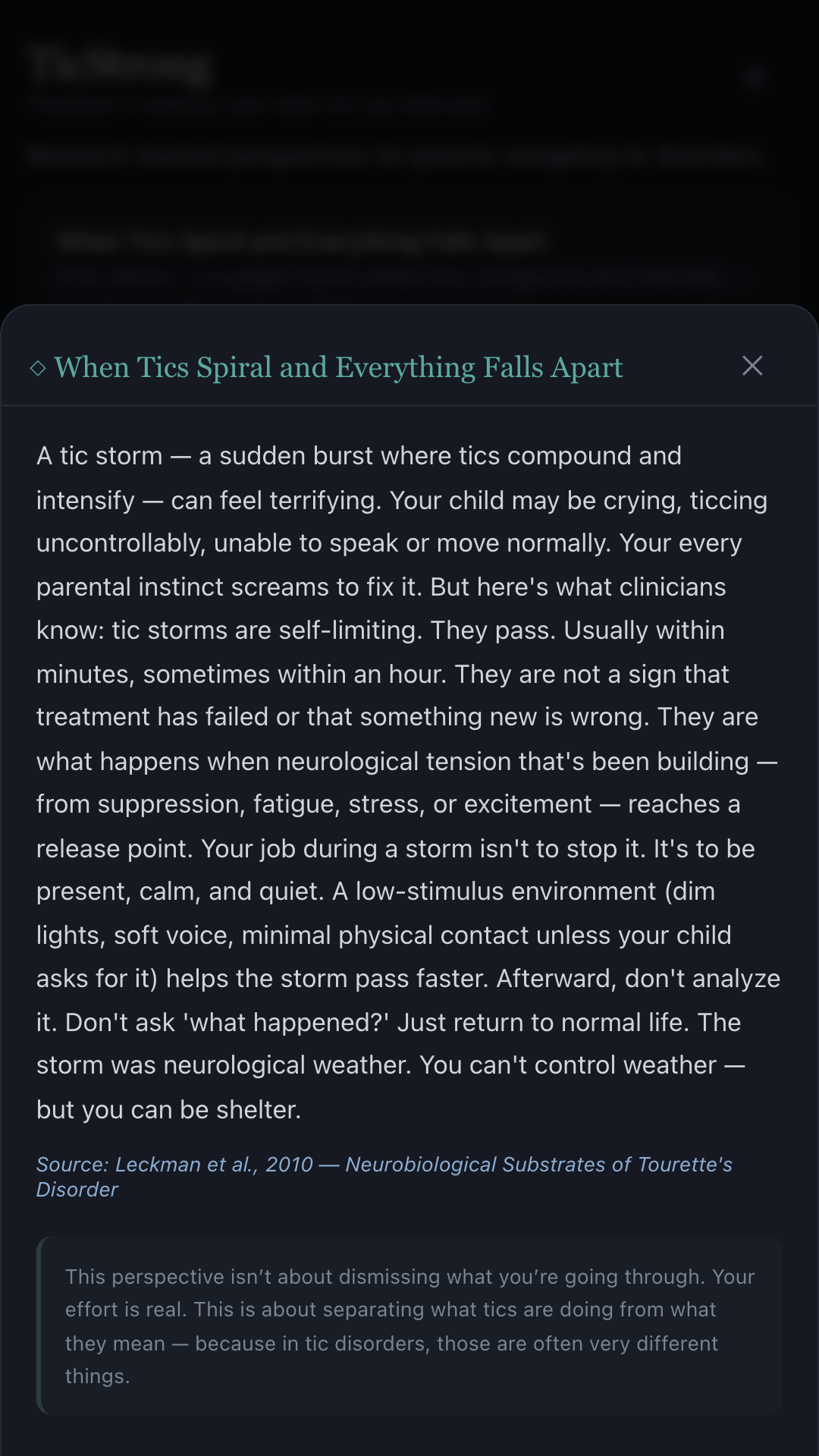
Perspective Shift cards deliver short, research-backed reframes grounded in the Tourette's and tic disorder literature. Each card pairs what you're feeling with what researchers and CBIT clinicians actually say about reaction, attention, urges and what the evidence shows about real progress.
Parents of children with tics are already running a mental tally from morning to night. The last thing they need is a tool that demands a long diary. The daily check-in is 30 seconds: a handful of sliders and an optional note.
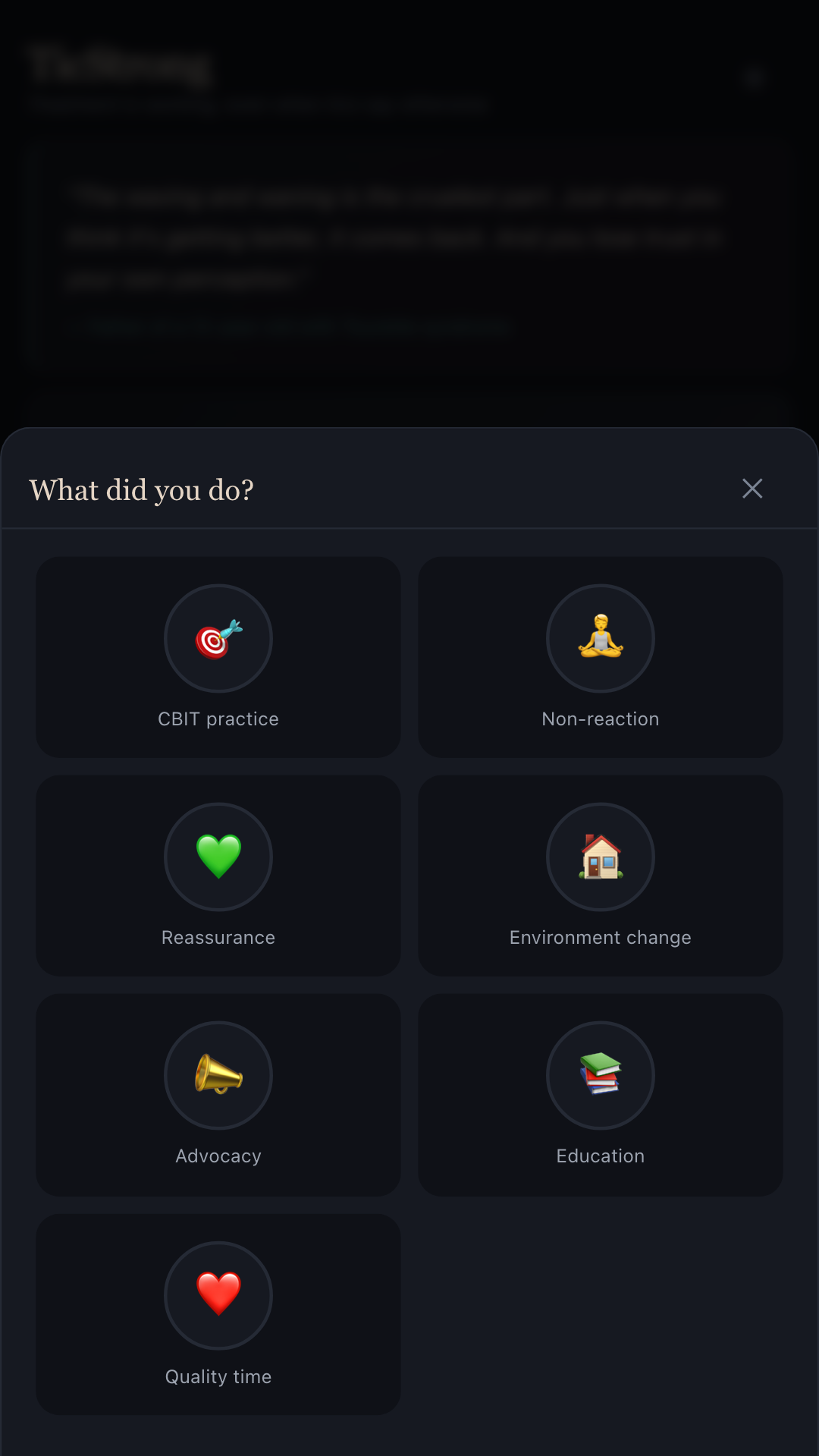
The Daily Log is designed for parents who are already watching everything. Rate a few dimensions — severity, impact, CBIT practice, your own reactions — and move on. Those 30 seconds power the Timeline, the Patterns, and the clear picture you can share with your neurologist or CBIT therapist.
Fast enough to do on the loudest days. That's how trends get built.
Grounded in the behavioural literature on tics and Tourette's, not folk advice.
All data stays on your device. No accounts, no servers, no analytics.
TicStrong is for the parent biting their tongue through a hundred micro-moments every day — the person doing the part of treatment that happens away from the clinic.
{{^app.live}}Coming soon to Google Play
{{/app.live}}